A website for a technical change in mining
Stratum V2 updates communication between Bitcoin miners and pools. The website needed to explain why that matters and help visitors find a useful next step. I handled research and the redesign, while collaborators built the work in code.
I worked on the website's audience journeys and on how it explains protocol features. This case follows my 2025 redesign, from working-group feedback to launch.
Technical features do not tell everyone where to go
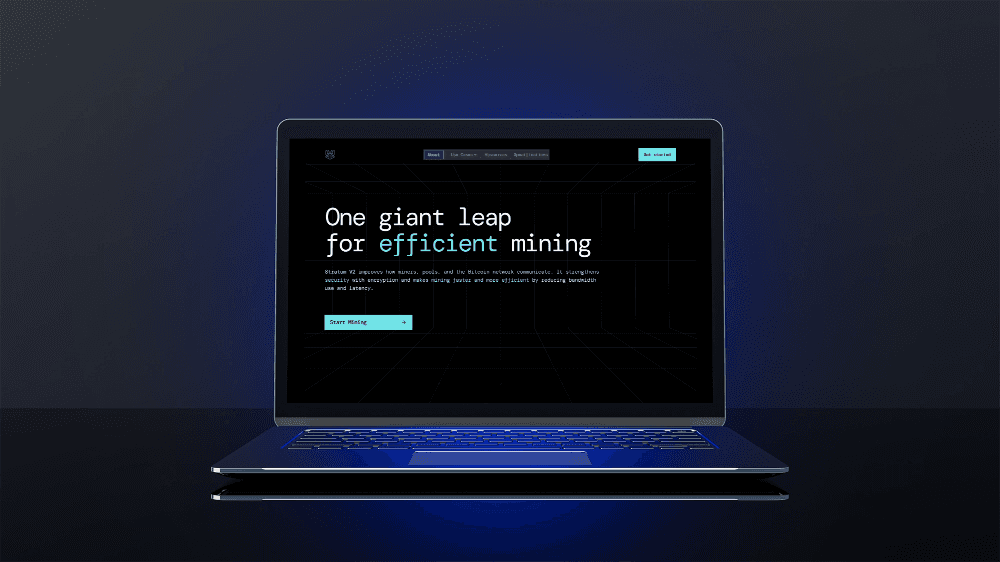
A miner looking to connect and a developer looking for the specification need different paths. Explaining encryption or job declaration helps, but it does not tell either of them what to do next. I separated the journeys for miners and pool operators, with routes for developers and people learning about the protocol.
The adoption path had to match reality too. The proposed Start Mining flow assumed standardised pool software. Maintainer feedback showed that was wrong, so the next step itself became a design problem.
Work through prototypes with the working group
I used working-group feedback to revise the layout and flow, and shared prototypes through Figma and GitHub. Early feedback asked for left-aligned copy, stronger contrast and text that was easier to scan, and I took that into the prototype and handoff.
Roles were clear. Pavlenex worked on revised centralisation copy while I handled the block layout, and Abhijay007 implemented the linked hero and spacing changes. My part was the research and design behind them.
Important information was easy to scroll past
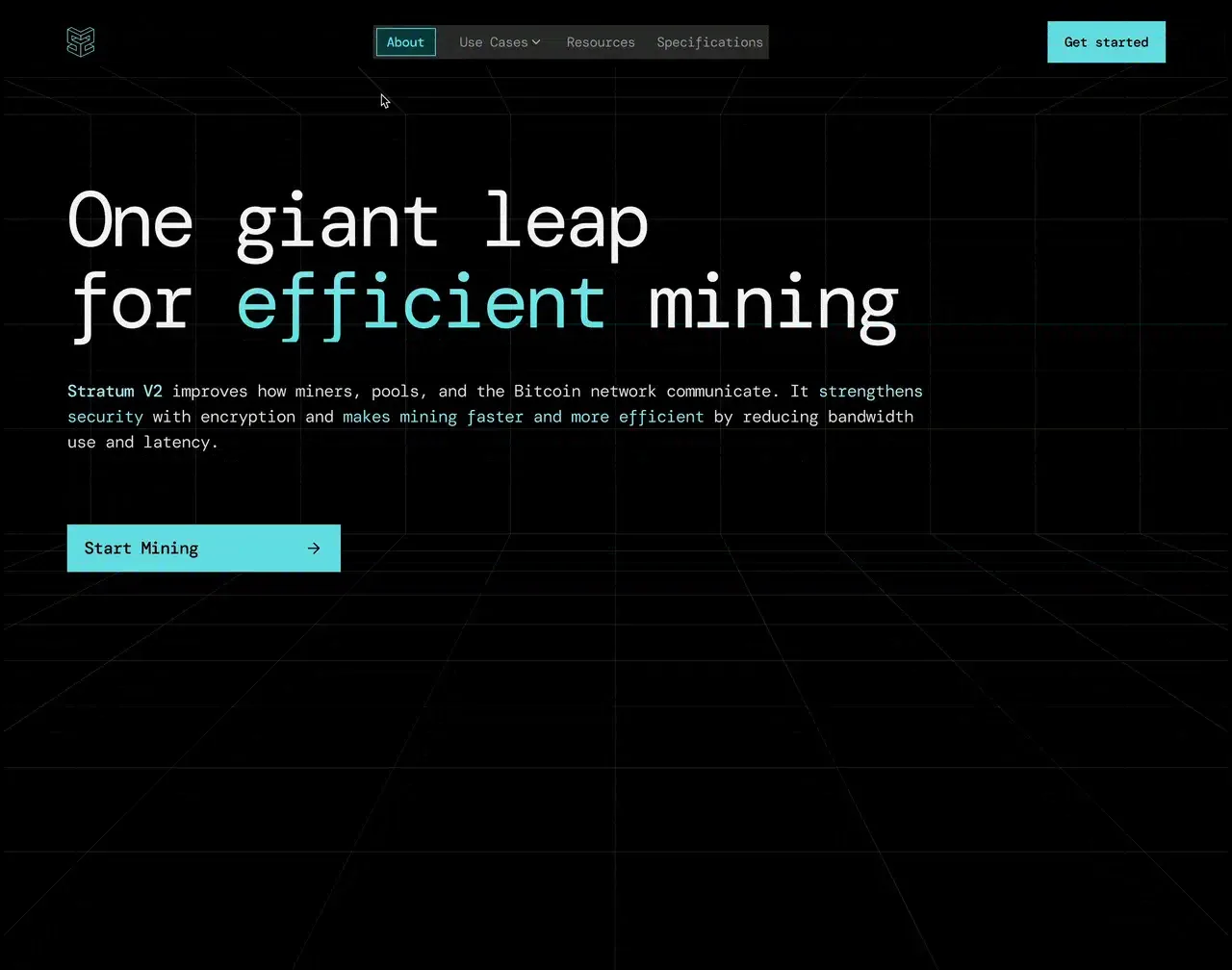
The hero used changing text to explain the protocol, but visitors scrolled past the changes without noticing. Having the information on the page was not enough. People had to see it at the right moment.
The background grid competed with the content, so I asked for it to be less dominant. These readability fixes ran alongside the larger task of keeping the adoption instructions technically accurate.
Give the explanation a usable destination
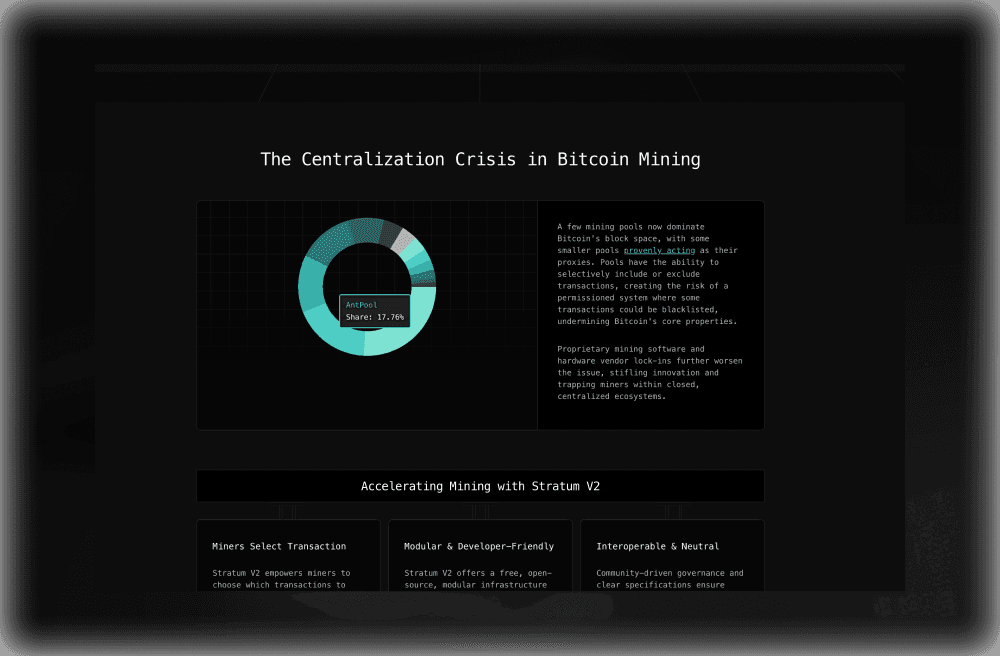
The mining entry moved toward supported pools instead of assuming one universal software setup. For the hero, I proposed sticky positioning after the missed-content feedback. Collaborators implemented the changes, and the merged PRs tie the code back to the design discussions.
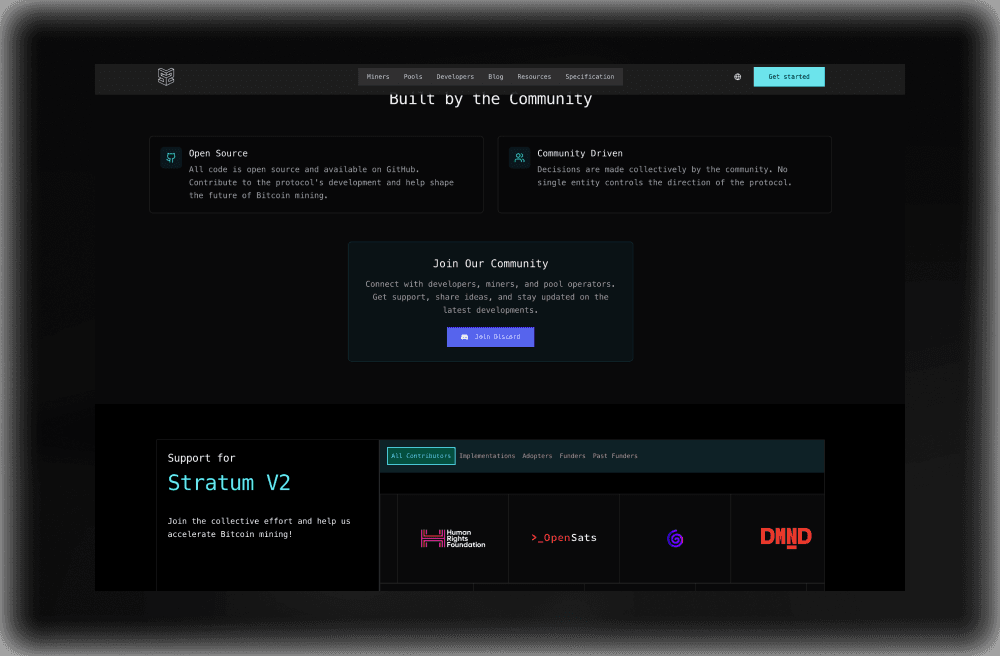
The redesigned website launched in July 2025 with English, Chinese and Russian versions. The launch film is below.
An explanation needs a truthful next step
The pool-software feedback is the lesson I keep coming back to. A well-designed button is still wrong if it sends someone into a setup that does not exist for them. Working with maintainers let me correct the journey itself.
The hero feedback made the same point from another side: people have to notice an explanation before it can help them, so I design for how they actually move through the page.
Based on my original Stratum V2 case study ↗. Reviewed November 2026. Screens show the version documented in this case study.